Zafeirios Fountas

Co-founder & CEO  ·  Empiria One

Brain-inspired AI  ·  London

↓

About

Zafeirios Fountas portrait

I'm the co-founder and CEO of Empiria One, a London start-up building private models that learn on the job. Previously I was a Principal Research Scientist and group leader at Huawei, where I led the brain-inspired computing team. My work sits at the intersection of cognitive neuroscience and machine learning, with a focus on memory, continual learning and decision making.

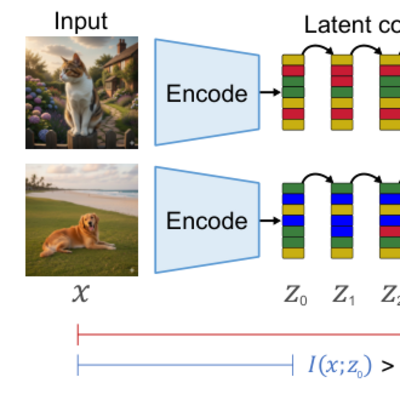
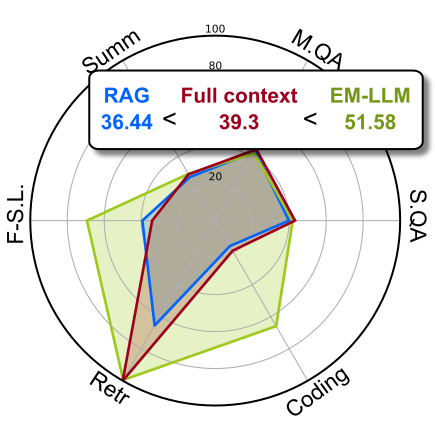
Today, I'm most excited by how ideas from the brain (episodic memory, consolidation, integrated reasoning and intrinsic motivation) can make large language models think and remember more like we do. Recent examples: EM-LLM (ICLR 2025), a brain-inspired episodic memory for LLMs; Bottlenecked Transformers (ICLR 2026), which periodically consolidate a transformer's working memory to improve reasoning; and Why the Brain Consolidates (2026), which argues that predictive forgetting is what lets memory generalise.

Before Huawei, I was a founding scientist at Emotech, where I led the AI behind Olly (a personal robot that won 4 CES Innovation Awards). I was also a research fellow at the Wellcome Centre for Human Neuroimaging, UCL, working with Karl Friston on active inference. Before that, I spent eight years at Imperial College London's Department of Computing, doing my PhD with Murray Shanahan.

News

Selected publications

LowRAM: Low-Rank Keys and Amortised Values for Composable KV Cache Compression at Test-Time

T. Delgado, H. Hazard, M. Benfeghoul, J. Wang, Z. Fountas

arXiv pre-print, 2026

Why the Brain Consolidates: Predictive Forgetting for Optimal Generalisation

Z. Fountas, A. Oomerjee, H. Bou‑Ammar, J. Wang, N. Burgess

arXiv pre-print, 2026

Human-inspired Episodic Memory for Infinite Context LLMs

Z. Fountas, M. A. Benfeghoul, A. Oomerjee, F. Christopoulou, G. Lampouras, H. Bou‑Ammar, J. Wang

ICLR 2025

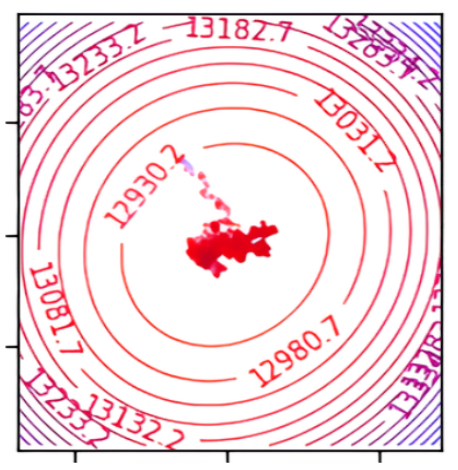
Sample as You Infer: Predictive Coding with Langevin Dynamics

U. Zahid, Q. Guo, Z. Fountas

ICML 2024

A Predictive Processing Model of Episodic Memory and Time Perception

Z. Fountas, A. Sylaidi, K. Nikiforou, A. K. Seth, M. Shanahan, W. Roseboom

Neural Computation, 2022

Variational Predictive Routing with Nested Subjective Timescales

A. Zakharov, Q. Guo, Z. Fountas

ICLR 2022

A Hierarchical Attractor Network Model of Perceptual versus Intentional Decision Updates

A. Löffler, A. Sylaidi, Z. Fountas, P. Haggard

Nature Communications, 2021

Episodic Memory for Learning Subjective-Timescale Models

A. Zakharov, M. Crosby, Z. Fountas

URL Workshop, ICML 2021

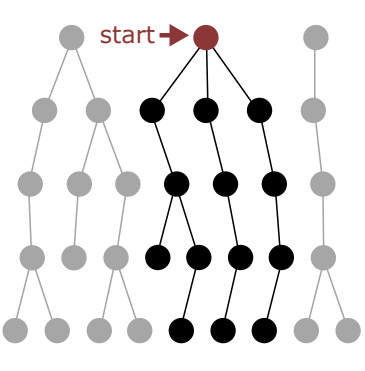
Deep Active Inference Agents using Monte-Carlo Methods

Z. Fountas, N. Sajid, P. A. M. Mediano, K. Friston

NeurIPS 2020

Activity in Perceptual Classification Networks as a Basis for Human Subjective Time Perception

W. Roseboom, Z. Fountas, K. Nikiforou, D. Bhowmik, M. Shanahan, A. K. Seth

Nature Communications, 2019

Full publication list → Google Scholar →

Talks

Featured recording · Zangwill Club, University of Cambridge · 9 October 2026

Why Intelligence Requires Forgetting: Memory and Consolidation in Brains and Language Models

Brains turn experience into durable, general knowledge largely by discarding. In this talk I argue that the limits of large language models are a memory problem rather than a scale problem: surprise-driven episodic segmentation produces event boundaries that track human event perception, and predictive forgetting, an outcome-conditioned compression of memory, provably optimises generalisation in high-capacity systems. Such models then become instruments for neuroscience, and raise a new question for AI evaluation.

  • Invited seminar: Sussex AI, University of Sussex · Why Intelligence Requires Forgetting: Memory and Consolidation in Brains and Language Models Recording
  • Invited talk: Zangwill Club, Department of Psychology, University of Cambridge · Why Intelligence Requires Forgetting: Memory and Consolidation in Brains and Language Models Listing · Recording
  • Poster: ASSC 29, Santiago de Chile · The Global Key-Value Workspace: A Unifying Consciousness Theory Achieves State-of-the-Art Reasoning in LLMs Poster site
  • Invited seminar: ICARL Seminar Series, Department of Computing, Imperial College London · Episodic Memory, Consolidation, and Synergistic Processing: Convergent Principles in Biological and Scalable Artificial Intelligence Listing
  • Invited seminar: UCL NeuroAI online seminar series · Episodic Memory, Consolidation, and Synergistic Processing: Convergent Principles in Biological and Scalable Artificial Intelligence Listing
  • Talk: ASSC 28, Heraklion · A Bayesian Account of Temporal Consciousness: From Event Processing to the Experience of Flow Slides
  • Invited talk: Workshop Episodic Memory: Uniquely Human?, CPNSS, London School of Economics · Sense of time, events and episodic memory in humans and AI Programme
  • Panellist: LSE Philosophy Live, London School of Economics · Living in the past: exploring memory in humans, animals, and artificial agents (with N. Clayton, F. De Brigard and J. Mahr; chair A. Boyle) Video · Podcast
  • Organised workshop: Temporal Representations in Reinforcement Learning, RLDM 2022, Providence RI
  • Invited keynote: 2nd International Workshop on Active Inference (IWAI), ECML/PKDD 2021
  • Invited talk: Meet AI @ Shanghai · Challenges of brain-inspired AI: from lab to product
  • Invited talk: AI Assistant Summit London · Imitating humans with brain-inspired AI
  • Talk & demo, Royal College of Art (with A. Sylaidi) Slides
  • Interview: The i newspaper · Scientists train AI to 'dream' about pink mugs like humans do

Earlier work

Founding scientist · Emotech · 2015–2020

Olly: The 1st home robot with personality

I led the AI design behind Olly, a smart-home personal robot whose architecture was based on global workspace theory. Olly could predict users' personality and affective state, convey its own mood, and behave proactively rather than reactively.

Olly won 4 CES Innovation Awards in 2017 (the largest number ever awarded to a single robot product) and was demonstrated at the Royal Institution Christmas Lectures the same year.

MSc thesis · Imperial College London · 2010–2011

NeuroBot: Passing the Turing test for AI bots?

NeuroBot was a large-scale spiking neural network of around 20,000 neurons that controlled an avatar in Unreal Tournament 2004 in a human-like manner. The high-level coordination was based on global workspace theory.

NeuroBot finished second in the 2K BotPrize human-like-bot competition at CIG 2011 in Seoul (the second-best score in the competition's history at the time), and was covered by New Scientist, EDGE and others. Early human-like AI work, well before LLMs made this fashionable.

Co-founder · Aristotle University · 2007–2010

PANDORA Robotics

Co-founded PANDORA, a student-led robotics research team at Aristotle University focused on rescue robots: vehicles that navigate disaster areas and locate human victims. The team went on to compete at RoboCup Rescue in 2011, 2013 and 2015, finishing second in the autonomy category in 2013 and 2015.

I started by designing and building a custom robotic arm, then led the arm and AI teams as we competed at the RoboCup Rescue Robot League world championships in Suzhou (2008) and Graz (2009, best European participation).
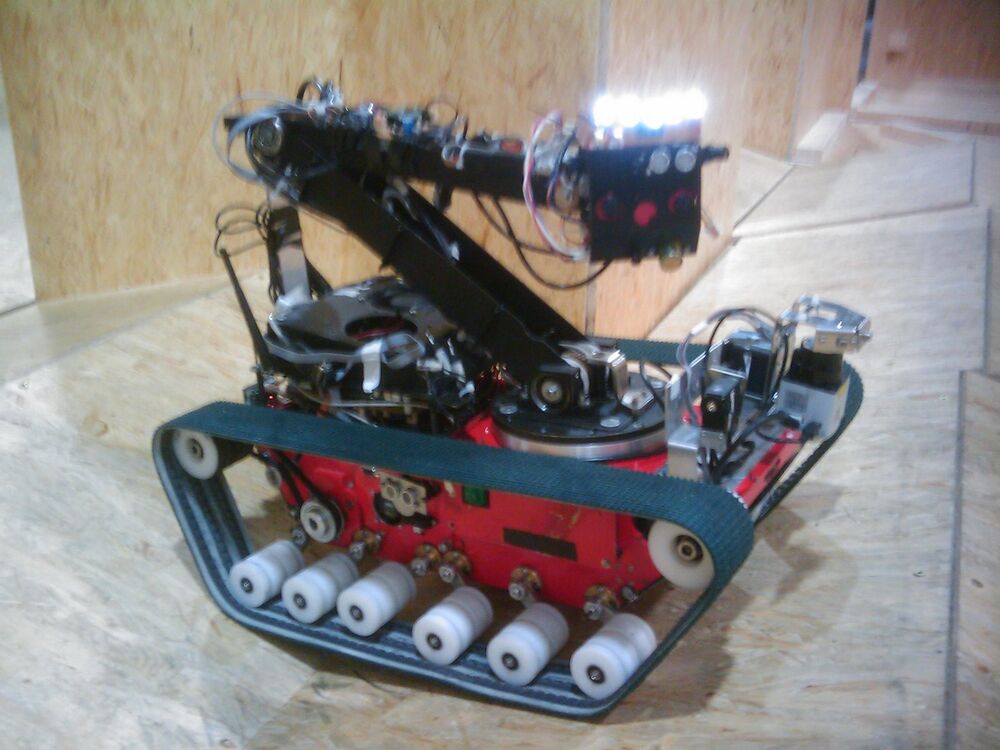
PANDORA tracked rescue robot with its arm in the RoboCup 2009 arena, Graz 1 / 5

Biography

Experience

  • Co-founder & CEO
    Empiria One, London · private models that learn on the job
  • Principal Research Scientist, Group Leader
    Huawei Technologies, UK · brain-inspired computing
  • Honorary Research Fellow
    Wellcome Centre for Human Neuroimaging, UCL · active inference, deep learning
  • Visiting Lecturer
    School of Design, Royal College of Art
  • Research Associate & PI
    Imperial College London · EU TimeStorm project
  • Research Scientist, Founding Member
    Emotech Ltd · personality modelling, AI lead for Olly
  • Co-founder & Team Lead
    PANDORA Robotics, Aristotle University of Thessaloniki

Education

  • PhD, Computational Neuroscience
    Imperial College London, Department of Computing
    Action Selection in the Rhythmic Brain. Supervisor: Murray Shanahan
  • MSc, Computing Science (Distinction)
    Imperial College London · Distinguished thesis
  • Erasmus Exchange
    City University London, Department of Mathematical Science
  • BSc, Mathematics
    Aristotle University of Thessaloniki

Selected awards & recognition

  • 4 × CES 2017 Innovation Awards · lead AI designer for Olly (smart home, drones, home appliances, audio-video accessories), Las Vegas, January 2017
  • Guest speaker, Royal Institution Christmas Lectures 2017 · presentation and demonstration of Olly
  • Top Reviewer, NeurIPS 2024
  • Google EMEA Scholarship, 2014–15
  • EPSRC Doctoral Training Account Studentship, Imperial College London, 2012–2015
  • 2nd best score in 2K BotPrize history (until 2011) · CIG 2011, Seoul
  • Distinguished MSc thesis, Imperial College London, 2011

Professional service

  • Area Chair, ICLR 2026
  • Reviewer for NeurIPS, ICLR and ICML, and for Nature Human Behaviour, Trends in Cognitive Sciences, eLife and IEEE Access

Download full CV (PDF, May 2026) →

Get in touch

Happy to hear from researchers and engineers working on memory, active inference, or anything brain-inspired. The fastest way to reach me is email.

Off-screen interests: chess, sailing, FPV, philosophy of mind, music.